
8 Signs Your Cortisol May Be Running High (and What to Do Next)
You're exhausted all day, then wide awake the minute your head hits the pillow. Your stomach is unsettled more often than not. You snap at small things, crave something sweet every afternoon, and catch every cold that comes through the house. If that sounds familiar, cortisol may be part of the story.
Cortisol gets a bad reputation, but it isn't the enemy. It's a hormone your body needs every single day. The trouble starts when it stays high for too long. Here's a plain-language look at what cortisol does, the signs it may be running high, and how we approach it.
What Cortisol Actually Does
Cortisol is made by your adrenal glands, two small glands that sit on top of your kidneys. It helps you wake up in the morning, keeps your blood sugar steady between meals, calms inflammation, and helps your body respond to stress.
In a healthy rhythm, cortisol rises in the first hour after you wake up, which helps you feel alert. It then slowly falls through the day and reaches its lowest point around bedtime, so you can wind down and sleep.
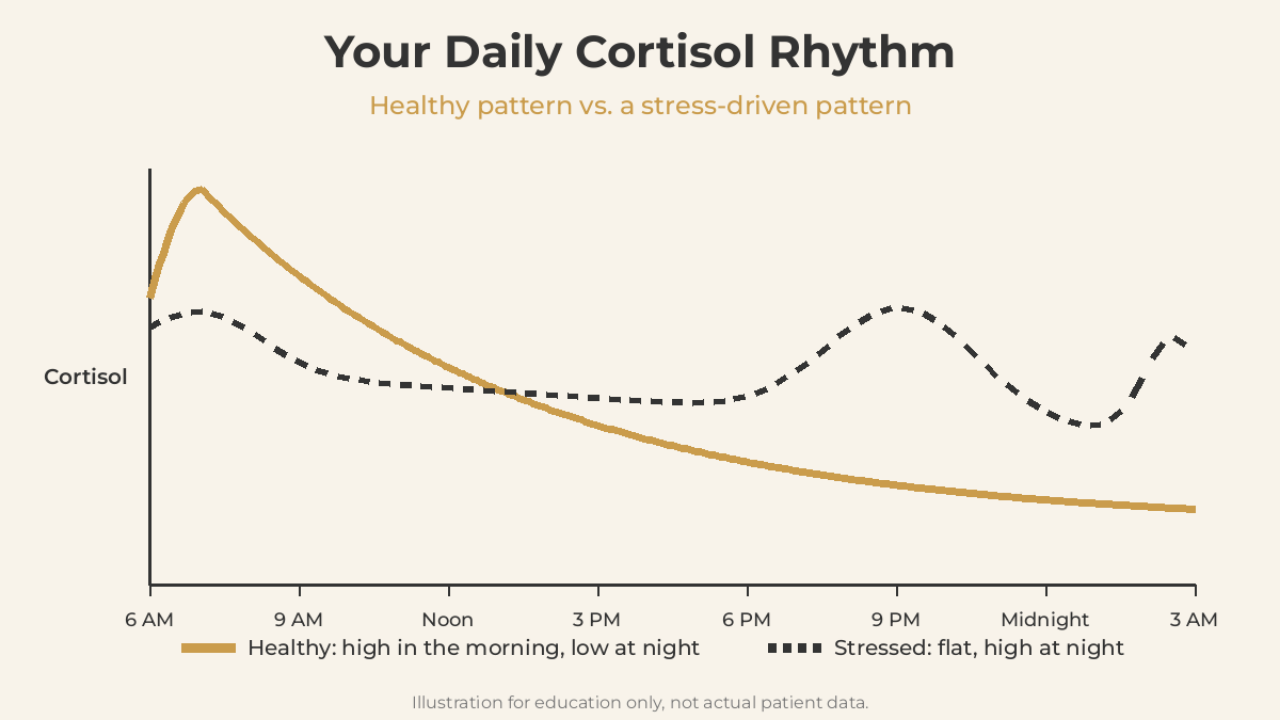
When stress is constant, whether it comes from work, family, poor sleep, illness, or even skipped meals, that rhythm can get thrown off. Cortisol may stay high into the evening, or the whole curve may flatten out. Either way, you feel it.
8 Common Signs of High Cortisol
Everyone is different, and these signs overlap with many other conditions. Still, these are some of the patterns we see most often.
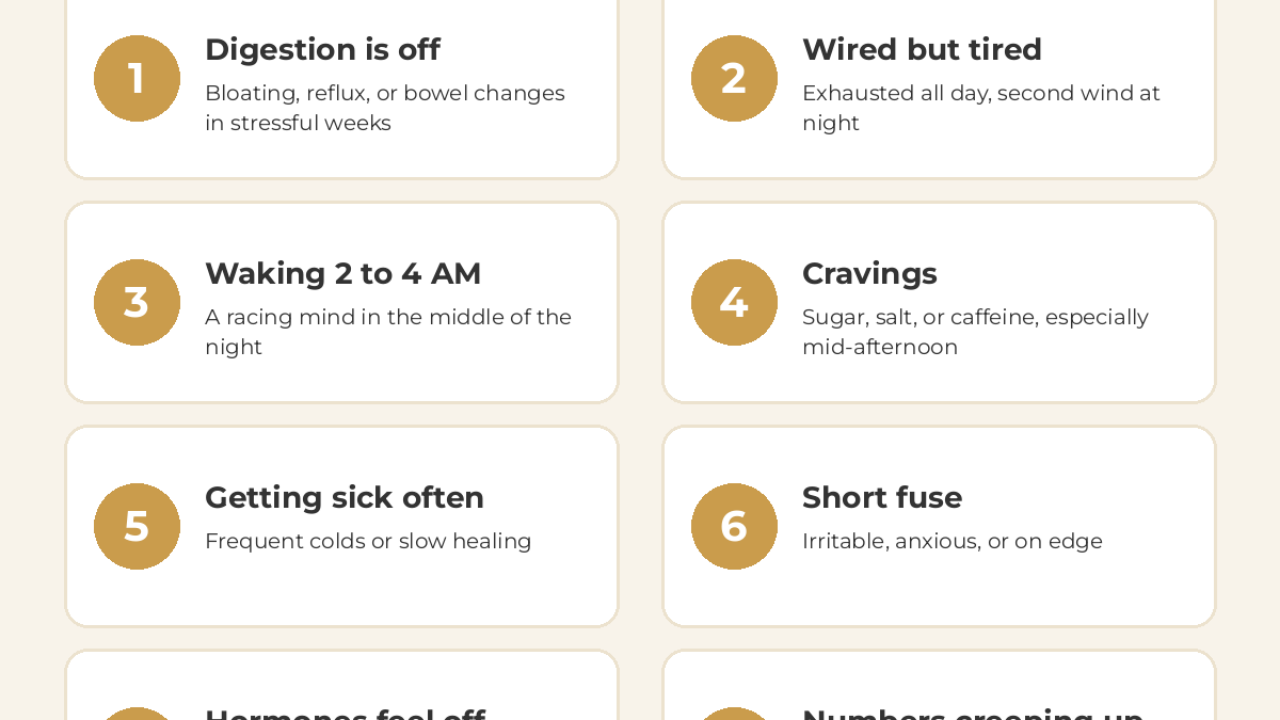
1. Your digestion is off. We always start with the gut. Stress hormones slow down digestion, lower stomach acid, and can change the balance of bacteria in your gut. Bloating, constipation, loose stools, or reflux that flares during stressful weeks can all be linked to cortisol.
2. You feel "wired but tired." You drag through the day but get a second wind at night. That's often a sign cortisol is staying high when it should be dropping.
3. You wake up between 2 and 4 AM. Falling asleep may be fine, but staying asleep is not. A cortisol spike in the middle of the night can jolt you awake with a racing mind.
4. You crave sugar, salt, or caffeine. Cortisol affects blood sugar. When it's out of balance, you may find yourself reaching for quick energy, especially mid-afternoon.
5. You get sick more often. Short bursts of cortisol help your immune system, but long-term high cortisol can weaken it. Frequent colds or slow healing can be a clue.
6. Your mood feels short-fused. Irritability, anxiety, or feeling on edge for no clear reason are common when your body is stuck in "go" mode.
7. Your cycle or hormones feel off. Your body makes cortisol from some of the same building blocks it uses for other hormones. Under ongoing stress, cortisol tends to win, which can show up as irregular cycles, worse PMS, or low libido.
8. Your blood pressure or blood sugar is creeping up. Cortisol raises both. If your numbers have been inching up at checkups, it's worth a closer look.
One or two of these on their own doesn't mean your cortisol is high. But if several sound like your daily life, it's a good reason to talk with a provider.
Why Cortisol Stays High
High cortisol is usually a symptom of something else, not the root problem. Common drivers include:
- Gut stress. Ongoing inflammation, food sensitivities, or an imbalance of gut bacteria can act as a constant, quiet stressor on your body.
- Blood sugar swings. Skipping meals, running on coffee, or eating mostly refined carbs can trigger cortisol to keep blood sugar up.
- Poor or short sleep. Less sleep raises cortisol, and higher cortisol makes it harder to sleep. It's a cycle that feeds itself.
- Chronic mental and emotional stress. Caregiving, demanding jobs, and busy family schedules add up.
- Over-training without recovery. Exercise is healthy, but intense workouts without enough rest can push cortisol higher.
- Other health conditions or medications. Some medications, including steroids, raise cortisol. Rarely, a medical condition causes very high cortisol, which is why testing and a proper evaluation matter.
How Cortisol Is Tested
A single blood draw only shows one moment in time. Because cortisol follows a daily rhythm, it's often more helpful to see the whole curve. Depending on your symptoms, your provider may recommend:
- Saliva or dried urine testing collected at several points across the day to map your rhythm
- Blood work to check cortisol alongside thyroid function, blood sugar, and nutrient levels
- Gut testing, when digestive symptoms are part of the picture
Your provider will help you decide which tests make sense for you.
Simple Ways to Support Healthy Cortisol
These everyday habits can help your body find its rhythm again:
- Eat within an hour of waking, and include protein at each meal to keep blood sugar steady.
- Have caffeine after breakfast, not on an empty stomach, and keep it to the morning.
- Get morning daylight for 5 to 10 minutes. It helps set your body clock.
- Protect your sleep with a consistent bedtime and a dim, screen-free last 30 minutes.
- Choose gentle movement like walking, stretching, or yoga on stressful days.
- Take short breathing breaks. A few slow breaths, with a longer exhale than inhale, can tell your body it's safe to settle down.
- Support your gut with fiber-rich vegetables, enough water, and calm, unhurried meals.
These steps help many people, but they aren't a substitute for care when symptoms are ongoing.
How We Approach Cortisol at Functional Medicine of Delaware
At Functional Medicine of Delaware, we take a root-cause approach, starting with the gut. Instead of only chasing a lab number, we look at what's keeping your stress response turned on.
That begins with listening to your full story: your sleep, digestion, energy, cycle, and what a typical day looks like. From there, we use testing to map your cortisol rhythm and look at related systems like thyroid, blood sugar, and gut health. Your plan is built around you and may include nutrition, targeted supplements, sleep and lifestyle support, and follow-up visits so we can adjust as you go.
Stephanie Hollinshead is one of the providers who specializes in cortisol imbalances. Our providers currently accepting new patients are Stephanie Hollinshead, Kayla McManus, and Stephanie Ottaviani. We see patients virtually in Delaware and Maryland.
If these signs sound familiar, we're happy to talk through your options.
This article is for educational purposes only and isn't medical advice. Please talk with a qualified healthcare provider about your symptoms and treatment options.